


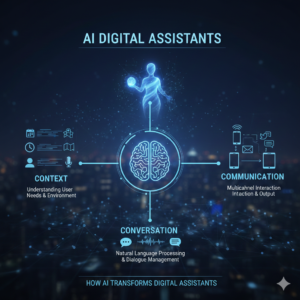
The capabilities of modern digital assistants, exemplified by systems like the technology powering recent updates to Siri (often referred to under the umbrella of ‘Apple Intelligence’), showcase a fundamental evolution in artificial intelligence. This shift moves the assistant from merely executing pre-programmed commands to being a sophisticated, context-aware companion. This new generation of AI is deeply integrated into the operating system, dramatically improving user interaction, especially in complex areas like language translation.
The Engine of Personal Context
The key advancement lies in the assistant’s ability to retain and utilize personal context. Unlike earlier models that treated every request as a clean slate, the new AI is engineered to understand the state of the user’s device and their ongoing activities.
- System-Wide Awareness: The system can interpret what is currently displayed on the screen. For example, if a user receives a text message containing flight details, they can simply speak or type a request like, “Remind me about this flight tomorrow,” and the AI accurately pulls the flight number, date, and time from the visible text without requiring manual input.
- Conversational Memory: The assistant maintains the thread of a conversation. A user can ask, “Where is the nearest library?” and immediately follow up with, “What time does it close?” The AI automatically knows the “it” refers back to the library from the initial query, making the interaction feel seamless and natural.
- On-Device Processing: A significant technical detail is the deployment of optimized models that run directly on the user’s device. This on-device processing allows the AI to access personal data (like recent app usage or photo metadata) securely, without sending the information to remote servers, thus enabling deep personalization while enhancing user privacy.
Breaking Down Language Barriers with Live Translation
The advanced language models powering this AI are particularly effective in real-time language tasks, changing how people communicate globally.
- Real-Time Interpretation: The system offers live translation during conversations, which can occur over phone calls, video chats, or in person (often utilizing accessories like ear buds). The AI listens to the spoken language, quickly processes the audio, and outputs the translated speech or text captions with minimal lag.
- Enhanced Language Tools: This same AI foundation provides sophisticated Writing Tools that operate across applications. These tools can automatically summarize long documents, proofread text, or adjust the tone of an email (e.g., from formal to friendly) before it is sent, streamlining professional and personal communication.
- Audio Transcription: The system accurately transcribes lengthy audio recordings, such as lectures or meetings. Crucially, the AI can then generate concise summaries of these transcripts, allowing users to extract core information rapidly without listening to the entire recording.
Real-World Application and User Adoption
The integration of these capabilities is transforming day-to-day digital life. Users leverage the system-wide integration to organize information quickly, such as searching through thousands of photos using natural language descriptors (“Find the video of the graduation ceremony last year”). The reliability of the translation features empowers travelers and international business teams to communicate directly and effectively, reducing reliance on third-party services. By providing accurate, context-aware, and highly personal assistance with a strong focus on on-device privacy, these advanced AI systems are becoming indispensable tools for managing complexity in modern digital communication.